
Devon Rex energy is famous among cat lovers, and if you share your home with one of these pixie-faced cats, you already know they rarely sit still. This breed tends to stay playful, curious, and acrobatic long after other cats have settled into a calmer adult routine. Understanding what drives this behavior, and how to channel it safely, can make life easier for both of you. Here’s what every Devon Rex owner should know.
Table of Contents
- Why Devon Rex Cats Stay So Playful
- Typical Devon Rex Personality Traits
- Keeping Up With a High-Energy Cat
- Mental Stimulation Matters as Much as Physical Exercise
- When High Energy Signals a Problem
- The Role of the Devon Rex’s Unique Coat
- Social Needs and Compatibility With Other Pets
- Managing Destructive Behavior From Boredom
- Supporting Healthy Play Throughout Life
- Final Thoughts on Life With a Devon Rex
Why Devon Rex Cats Stay So Playful
Devon Rex cats are often described as the clowns of the cat world, and that reputation is well earned. Many owners notice that their Devon Rex never really grows out of kitten behavior the way other breeds do. Instead of mellowing with age, these cats often keep up a steady stream of games, climbing missions, and attention-seeking antics well into their senior years.
Part of this comes down to temperament traits that were selected for as the breed developed. Devon Rex cats were bred to be companion animals first, and breeders favored individuals who were social, curious, and engaged with their people. Over generations, this produced a cat that genuinely seems to crave interaction and stimulation rather than tolerating it.
This high energy is usually a sign of a happy, healthy cat, but it does mean owners need to think differently about enrichment compared to more laid-back breeds. A bored Devon Rex is far more likely to get into mischief than a bored, more sedentary cat.
Typical Devon Rex Personality Traits
Owners often describe their Devon Rex as more dog-like than catlike, and this isn’t just a cute comparison. These cats frequently follow their people from room to room, greet visitors at the door, and learn to respond to their name or simple cues. Many enjoy playing fetch, something not commonly associated with cats at all.
Devon Rex cats also tend to be highly social with both people and other pets. They often seek out physical closeness, perching on shoulders, draping themselves across laps, or wedging into whatever activity their owner is doing. This need for closeness is part of what makes the breed so beloved, but it also means they don’t do particularly well when left alone for long stretches.
- Strong desire to be near their people throughout the day
- Willingness to learn tricks or respond to simple training
- Tendency to seek out warm, cozy spots due to their thin coat
- High tolerance for handling and being carried around
- Vocal communication, including chirps, trills, and soft meows
Keeping Up With a High-Energy Cat
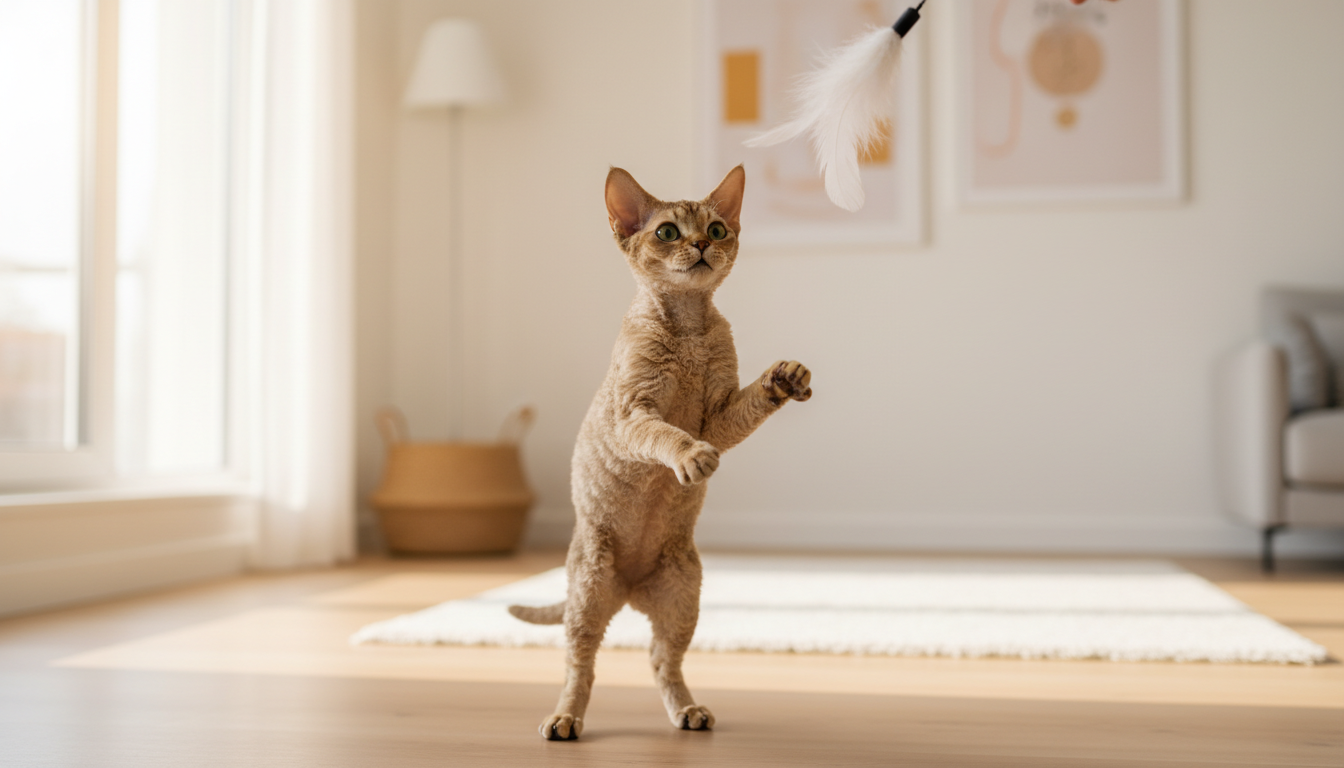
Meeting the activity needs of a Devon Rex takes more intentional effort than it might with a quieter breed. These cats genuinely benefit from daily play sessions that let them run, jump, and chase. Interactive toys that mimic prey movement, like wand toys with feathers or fabric strips, tend to be favorites because they tap into natural hunting instincts.
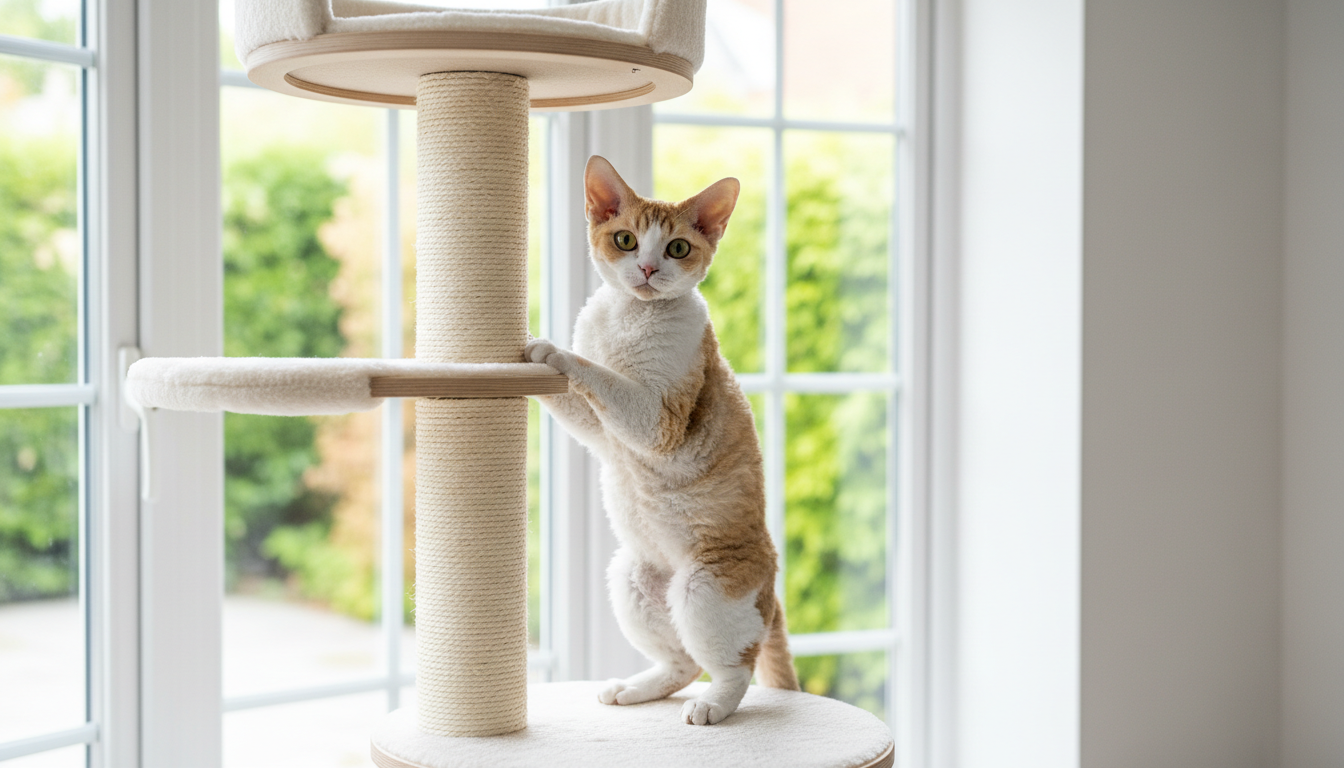
Vertical space matters a great deal too. Devon Rex cats love to climb, and giving them access to cat trees, shelving, or window perches helps satisfy that drive in a way that doesn’t involve your kitchen counters or curtains. Many owners find that without enough vertical territory, their cat starts finding creative, less desirable ways to get up high.
- Schedule at least two dedicated play sessions each day
- Rotate toys regularly to keep novelty high
- Provide multiple climbing and perching options throughout the home
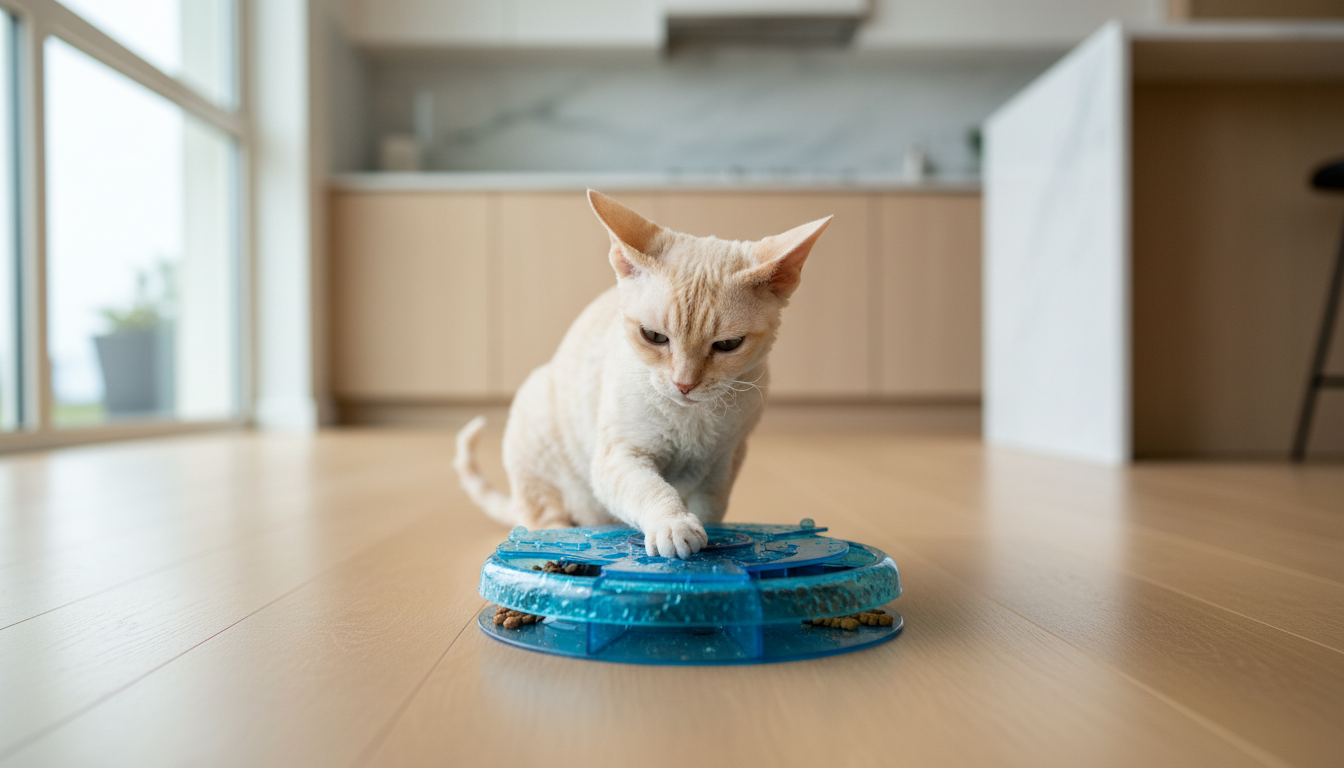
- Consider puzzle feeders to add mental stimulation at mealtime
- Offer supervised outdoor time in a secure enclosure if possible
Mental Stimulation Matters as Much as Physical Exercise
Because Devon Rex cats are so intelligent, physical exercise alone often isn’t enough to keep them content. These cats tend to thrive when given problem-solving opportunities, whether that’s a treat puzzle, a new toy to investigate, or simply the chance to watch birds from a safe window perch. Mental understimulation can show up as destructive behavior, excessive vocalization, or attention-seeking that becomes disruptive.
Training sessions, even short ones, can be a great outlet for this mental energy. Many Devon Rex owners find their cats pick up simple commands or tricks surprisingly fast, and the process of learning something new seems to genuinely engage them. Positive reinforcement with treats or praise tends to work well and strengthens the bond between cat and owner at the same time.
Rotating the environment occasionally, by introducing a new box, paper bag, or rearranged furniture, can also help keep things interesting for a cat that gets bored easily. Small changes often go a long way for a breed this curious.
When High Energy Signals a Problem
While a playful, energetic temperament is completely normal for this breed, a sudden change in activity level is worth paying attention to. If a typically bouncy Devon Rex becomes noticeably more lethargic, uninterested in play, or withdrawn, that shift could point to an underlying health issue rather than simple aging. Cats are often good at masking illness, so behavioral changes can be one of the earlier clues something is wrong.
On the flip side, energy that tips into obsessive or frantic behavior, such as nonstop pacing, excessive vocalizing that seems distressed rather than social, or repetitive behaviors that don’t resolve with play, can also be worth mentioning to your vet. These patterns don’t automatically mean something serious is going on, but they’re not something to just wait out either.
If you notice any sudden or significant change in your cat’s normal activity level, it’s best to schedule a visit with your veterinarian so they can rule out medical causes and make sure your cat is otherwise healthy.
The Role of the Devon Rex’s Unique Coat
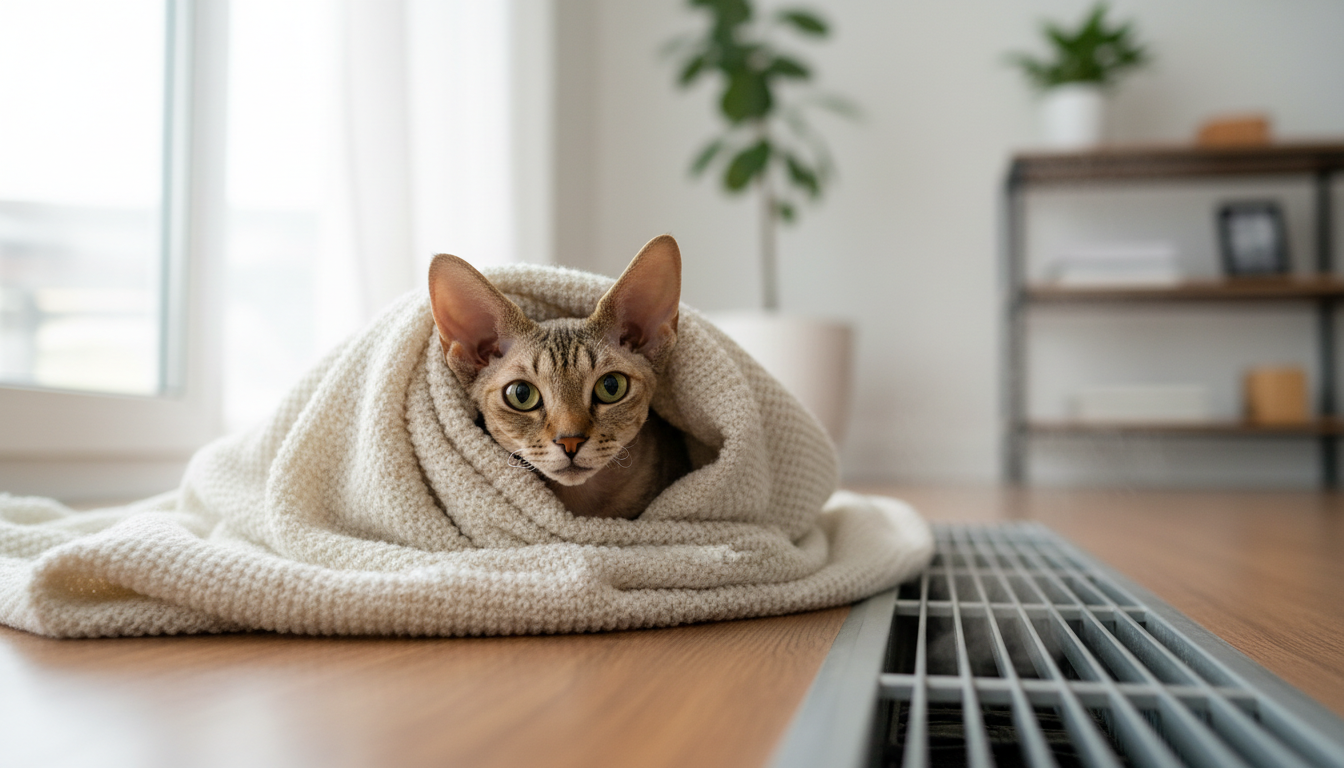
The Devon Rex’s famously soft, wavy coat is thinner than that of most cat breeds, and this plays into their behavior more than people often realize. Because they have less natural insulation, Devon Rex cats are drawn to warmth, and you’ll often find them burrowed under blankets, curled against a heating vent, or perched on top of a laptop or warm electronics. This isn’t just quirky behavior, it’s a genuine response to their physiology.
This heat-seeking tendency can also tie into their activity patterns. Many owners notice their Devon Rex has bursts of intense play followed by long stretches of deep, cozy sleep, almost as if they’re conserving energy between adventures. Providing warm, comfortable resting spots throughout the home supports their natural habits and gives them a place to recharge after a play session.

Social Needs and Compatibility With Other Pets
Devon Rex cats generally do well in multi-pet households, and many actually seem to prefer having companionship throughout the day. Their playful, easygoing nature often makes them a good match for dogs and other cats who enjoy interactive play. Introducing a Devon Rex to a new household member should still be done gradually, but this breed tends to adapt to new companions more readily than more territorial or solitary breeds.
That said, their need for interaction means they’re not always the best fit for households where everyone is gone for long hours every day. A lonely Devon Rex can become anxious or develop attention-seeking behaviors that are frustrating to manage. If your schedule keeps you away often, consider whether a second cat, a dedicated pet sitter, or extra enrichment tools might help fill that gap.
- Devon Rex cats often bond closely with every member of the household
- They typically enjoy the company of friendly, playful dogs
- Introducing a second cat can help prevent loneliness when owners are away
- Puzzle feeders and automated toys can help bridge gaps during work hours
Managing Destructive Behavior From Boredom
When a Devon Rex’s energy isn’t properly channeled, it tends to show up as mischief rather than aggression. Knocking items off shelves, getting into cabinets, or shredding paper products are common complaints from owners of understimulated cats in this breed. Rather than viewing this as a behavior problem to correct with discipline, it’s more productive to treat it as a signal that the cat needs more outlets.
Redirecting this energy usually works better than trying to suppress it. Providing acceptable alternatives, like a scratching post near the area they’re targeting or a puzzle toy right before you leave for work, can reduce unwanted behavior significantly. Consistency matters here, since these cats are smart enough to learn patterns quickly, for better or worse.
If destructive behavior appears suddenly in a cat that previously didn’t have these habits, it’s worth considering whether something has changed in the household, such as a new schedule, a move, or the loss of a companion pet. Sudden behavioral shifts are sometimes the cat’s way of communicating stress, and in some cases can also reflect an underlying medical issue that’s worth discussing with your veterinarian.
Supporting Healthy Play Throughout Life
Because Devon Rex cats often stay playful into their senior years, it’s easy to assume their activity needs stay constant forever. In reality, even the bounciest Devon Rex will naturally slow down somewhat with age, and it’s important to adjust expectations and activity levels accordingly rather than pushing an older cat to keep up with younger standards. Gentle, shorter play sessions tend to work better for senior cats, even within this generally energetic breed.
Watching for signs of stiffness, reluctance to jump, or hesitation on stairs can help you catch age-related joint changes early. Because Devon Rex cats are so naturally active, a decline in mobility can sometimes be more noticeable in this breed than in a cat that was never particularly athletic to begin with.
Regular wellness checkups become especially valuable as your Devon Rex ages, since your vet can monitor joint health, weight, and overall condition over time and help you adjust enrichment and exercise routines as needed.
Final Thoughts on Life With a Devon Rex
Living with a Devon Rex means embracing a cat that wants to be involved in everything you do, from working at your desk to relaxing on the couch. Their energy and playfulness are part of what makes the breed so endearing, but meeting those needs does take some ongoing effort and creativity. The payoff tends to be a deeply bonded, entertaining companion who rarely lets a day go by without a little mischief and a lot of affection.
If you ever notice a significant or lasting change in your Devon Rex’s energy level, appetite, or behavior, don’t hesitate to reach out to your veterinarian. They can help you figure out whether what you’re seeing is simply part of this breed’s quirky personality or something that deserves a closer look.
This article is for general education and is not a substitute for care from your own veterinarian. Learn about The Pet Vet and our editorial policy.