
Pembroke Welsh Corgi weight gain sneaks up on a lot of owners because these dogs are naturally sturdy and low to the ground, which makes extra pounds hard to spot. But that same long back and short-legged build means even a small amount of excess weight puts real strain on the spine and joints. This guide walks you through why Corgis gain weight so easily, how to recognize it, and what you can do to help your dog stay lean and healthy.
Table of Contents
- Why Corgis Are Prone to Packing on Pounds
- The Unique Risk for a Long-Backed, Short-Legged Breed
- Recognizing Early Signs of Weight Gain
- How Vets Assess a Healthy Weight for This Breed
- Building a Feeding Routine That Supports a Lean Body
- The Role of Exercise, Within Reasonable Limits
- Treats and Training Rewards Without the Calorie Overload
- When Weight Gain Signals Something Beyond Diet
- How Excess Weight Affects Quality of Life Day to Day
- Setting Realistic Weight Loss Goals
- The Importance of Involving the Whole Household
- Choosing the Right Food for a Weight-Conscious Corgi
- Monitoring Progress With Regular Vet Checkups
- When to Seek Veterinary Care Right Away
Why Corgis Are Prone to Packing on Pounds
Pembroke Welsh Corgis were bred as working herding dogs, which means they come with a hearty appetite and a body designed for stamina rather than a tall, lean frame. That combination of a big appetite and a naturally low metabolism for their size can create a steady calorie surplus if feeding isn’t carefully managed. Many owners also underestimate how small this breed actually is under all that fur, which leads to portions sized for a much larger dog.
On top of that, Corgis are notorious food motivators in training, and treats add up fast in a dog this size. A few extra training treats a day might seem harmless, but for a 25 to 30 pound dog, those calories can represent a meaningful chunk of their daily needs. Genetics also play a role, since some Corgis simply process food more efficiently than others, meaning the same bowl of kibble that keeps one dog trim will pack weight onto another.
Because Corgis carry weight well visually, due to their fluffy coat and short stature, owners often don’t notice gradual gain until it’s fairly significant. This is part of why regular weigh-ins and body condition checks matter so much for this breed specifically.
The Unique Risk for a Long-Backed, Short-Legged Breed
Unlike many breeds where extra weight mostly stresses hips and knees, Corgis carry a disproportionate risk to their spine. Their elongated back combined with short legs already places unusual mechanical stress on the vertebrae, and any extra body weight multiplies that load with every step, jump, and stair climb. This is a major reason vets take Corgi weight management so seriously compared to breeds with more typical proportions.
Extra weight doesn’t just affect the back, either. It adds pressure to the hips, elbows, and the already compact joints of short legs, which can accelerate wear and tear over the years. A Corgi carrying even a few pounds more than ideal may be dealing with meaningfully more joint stress than the number on the scale suggests.
Because of this anatomy, maintaining a lean body condition isn’t just about preventing diabetes or general health decline the way it might be in other breeds. For Corgis, it’s closely tied to protecting the spine and joints from injury and chronic pain over a lifetime.
Recognizing Early Signs of Weight Gain
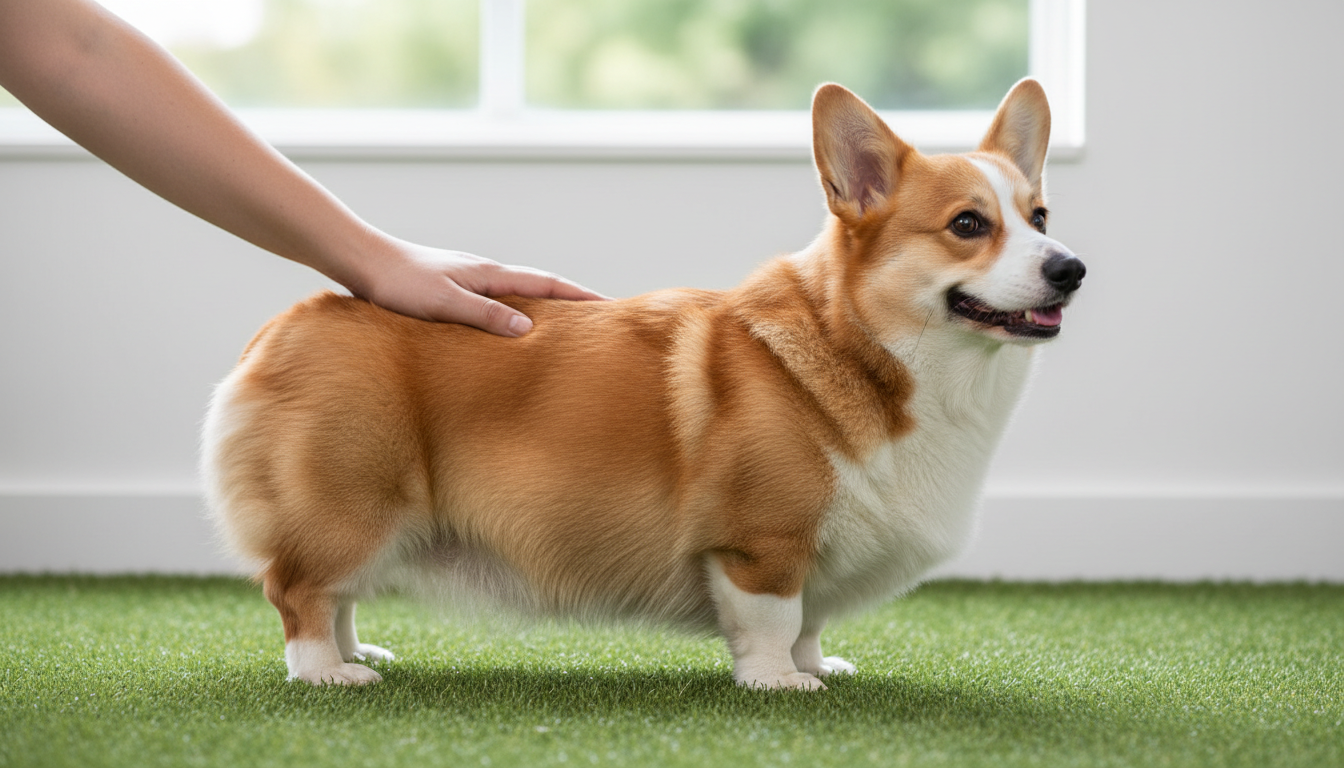
Catching weight gain early makes a real difference in how easily it can be reversed. Running your hands along your dog’s sides regularly is one of the best habits you can build, since visual cues alone can be deceiving under a thick double coat.
If you notice several of these signs, it’s worth scheduling a vet visit to get an objective assessment rather than guessing at home. A veterinary team can assign a body condition score and help you understand exactly how much, if any, weight your dog needs to lose.
- You can’t easily feel the ribs with light pressure, only with firm pressure
- There’s no visible waist when looking down at your dog from above
- The belly doesn’t tuck up when viewed from the side
- Your Corgi seems to tire more quickly on walks they used to handle easily
- Getting up from lying down looks more effortful than it used to
How Vets Assess a Healthy Weight for This Breed
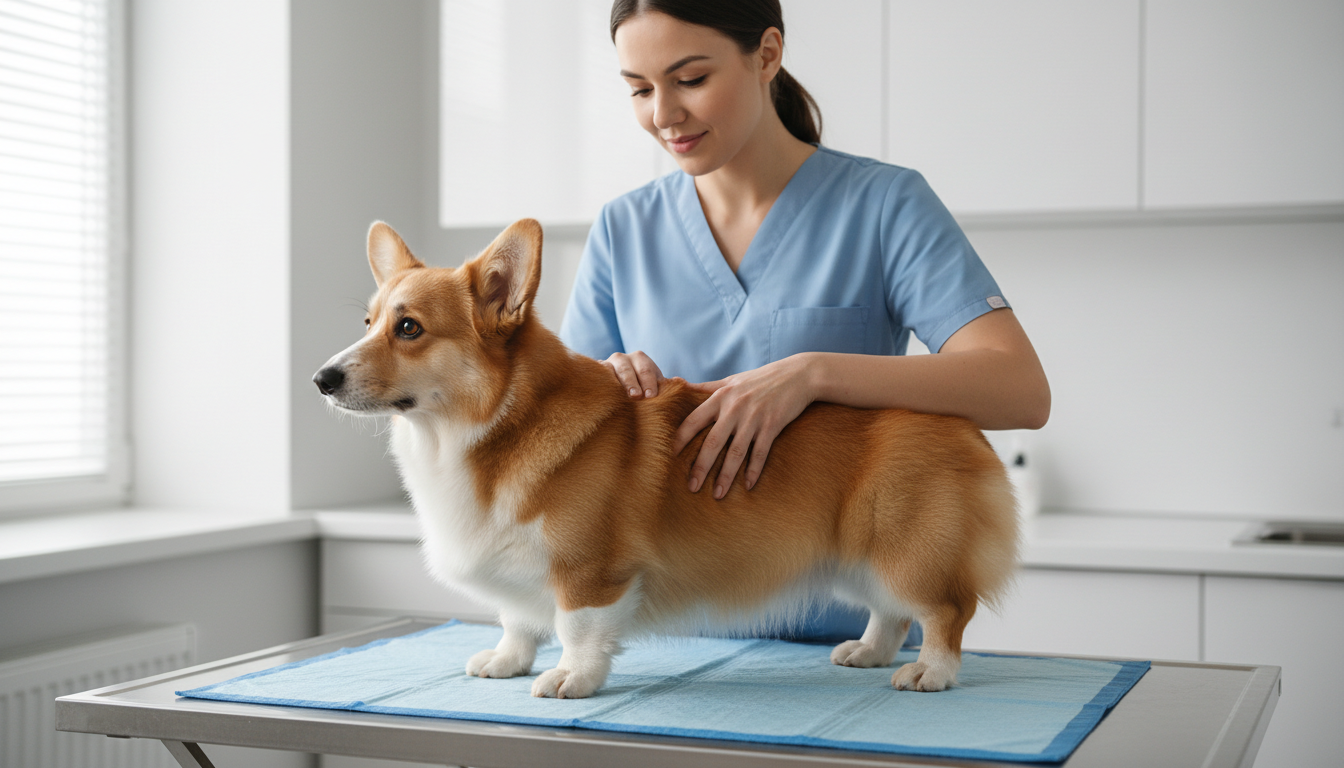
Because Pembroke Welsh Corgis have such a distinctive body shape, standard weight charts only tell part of the story. Vets typically rely on body condition scoring, a hands-on and visual system that looks at fat coverage over the ribs, spine, and hips rather than just a number on a scale. This approach accounts for individual variation in frame size, which matters a lot in a breed with such a unique silhouette.
During a wellness visit, your vet will likely feel along your dog’s ribcage, look at the waistline from above, and assess the abdominal tuck from the side. They may also ask about your dog’s activity level, diet, and any treats or table scraps to get a fuller picture. This full exam is far more reliable than relying on breed-average weight ranges, since a stocky, heavily built Corgi and a more lightly built one can both be perfectly healthy at different weights.
If your dog is overweight, your vet can help set a realistic target weight and a safe timeline for getting there, which is much safer than guessing at a diet plan on your own.
Building a Feeding Routine That Supports a Lean Body
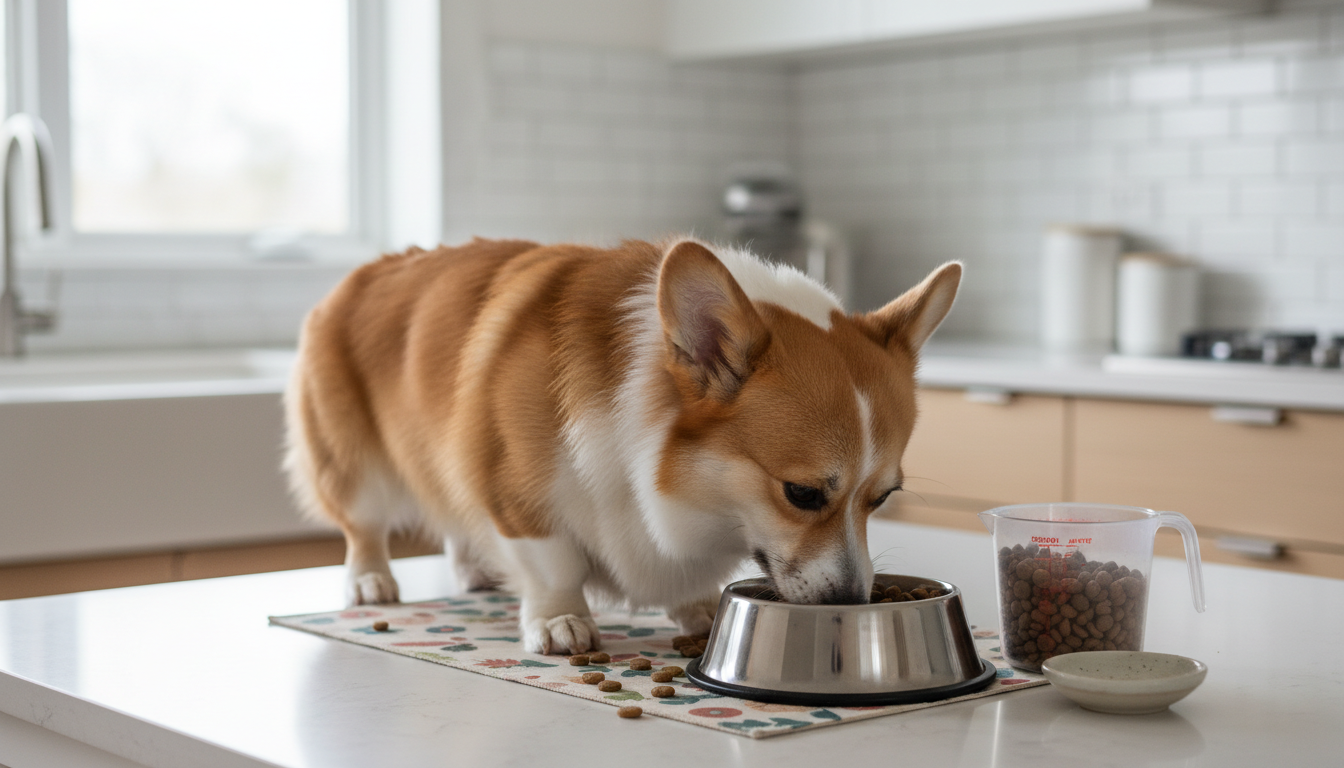
Consistency is one of the most powerful tools for managing a Corgi’s weight. Free-feeding, where food is left out all day, makes it very easy to lose track of how much your dog is actually eating, especially in a multi-pet household. Measured meals at set times give you much better control and make it easier to notice if your dog’s appetite changes.
Your vet or a veterinary nutritionist can help you figure out an appropriate starting point for daily calories based on your dog’s current weight, target weight, and activity level. From there, periodic weigh-ins let you adjust portions up or down as needed rather than sticking rigidly to a number that may no longer fit.
- Use an actual measuring cup or kitchen scale rather than eyeballing portions
- Feed two measured meals a day rather than free-feeding
- Factor treats into the day’s total calorie allowance rather than treating them as extra
- Avoid sharing table scraps, even small bites, since they add up quickly in a small dog
- Reassess portion sizes if your dog’s activity level changes significantly
The Role of Exercise, Within Reasonable Limits
Exercise is an important part of weight management, but it needs to be approached thoughtfully in a breed prone to back problems. High-impact activities like jumping off furniture, running up and down stairs repeatedly, or rough play that involves twisting the spine can increase injury risk, especially in a dog that’s already carrying extra weight. The goal is steady, low-impact movement rather than intense bursts of activity.
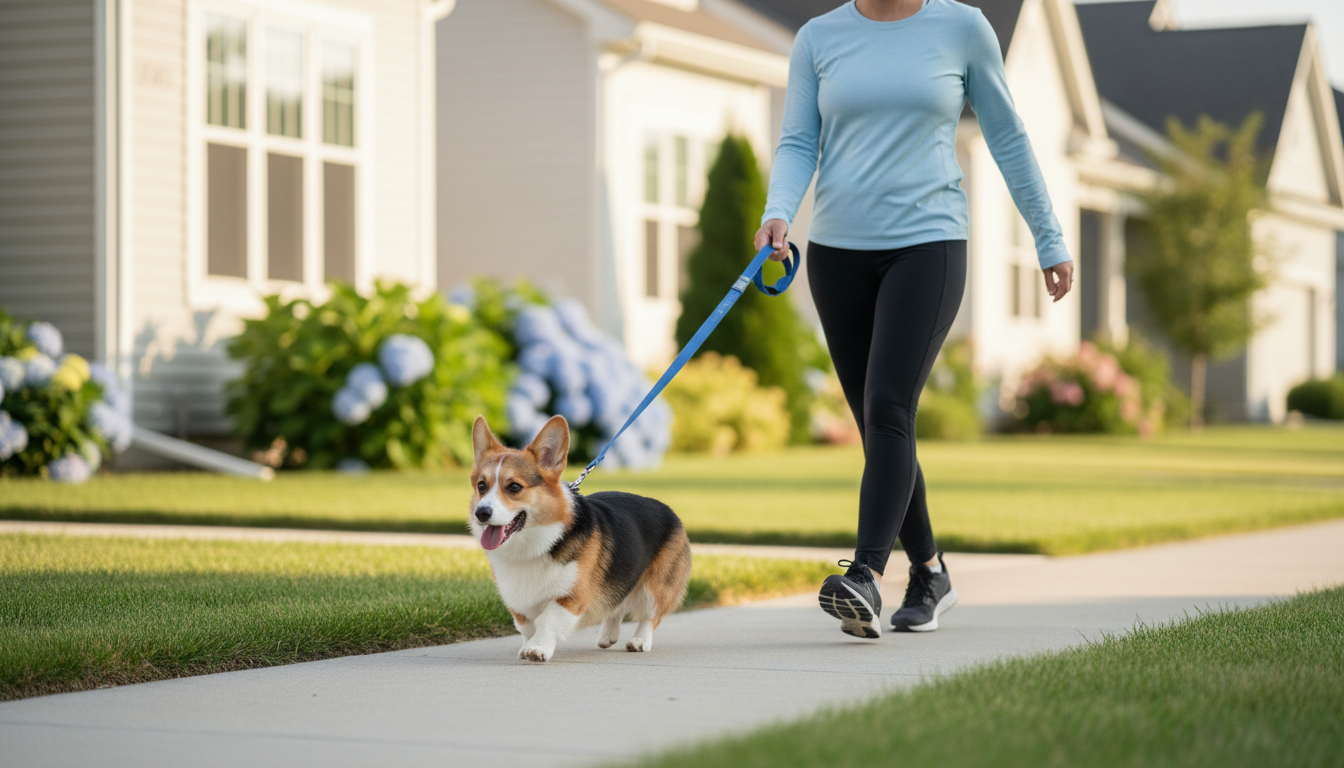
Daily walks are usually the safest and most reliable form of exercise for weight management in this breed. Swimming can also be a great low-impact option for some dogs, since it builds muscle and burns calories without jarring the joints or spine. Whatever activities you choose, building them up gradually and keeping surfaces non-slip can help reduce the chance of strain injuries along the way.
It’s worth talking to your vet before significantly increasing exercise in a dog that’s currently overweight or has any back or joint symptoms already. They can help you find a safe starting point and a pace for progressing that fits your individual dog.
Treats and Training Rewards Without the Calorie Overload
Training-based breeds like Corgis respond beautifully to food rewards, which is part of what makes them so trainable, but it also means treat calories can quietly become a large part of the daily diet. Being intentional about what and how much you use for training can make a big difference without sacrificing the effectiveness of your sessions.
Swapping some food rewards for praise, play, or a favorite toy can also help stretch training sessions without adding calories. This is especially useful once a behavior is well established and doesn’t need food reinforcement every single time.
- Break treats into small pea-sized pieces rather than giving whole ones
- Use a portion of your dog’s regular kibble ration as training rewards
- Choose low-calorie, single-ingredient treats when store-bought options are needed
- Save higher-value treats for harder training challenges rather than every rep
- Track treat calories as part of the day’s total food budget
When Weight Gain Signals Something Beyond Diet
While overeating and under-exercising are the most common reasons Corgis gain weight, it isn’t always that simple. Certain hormonal conditions can cause weight gain even when a dog’s diet hasn’t changed, and these become more common as dogs age. If your Corgi is gaining weight despite consistent, moderate feeding and normal activity, it’s worth mentioning to your vet rather than assuming more willpower around snacks will fix it.
Signs that might point toward an underlying medical cause include a sudden change in weight trend, hair coat changes, unusual lethargy, or changes in thirst and urination alongside the weight gain. Your vet may recommend bloodwork to rule out thyroid or other hormonal issues if the picture doesn’t add up to simple overfeeding.
Getting a proper diagnosis matters because a medical cause of weight gain won’t respond to diet and exercise changes alone, and treating the underlying condition is usually necessary before weight management efforts will be effective.
How Excess Weight Affects Quality of Life Day to Day
It’s easy to think of weight gain as a cosmetic issue, but for a Corgi it can meaningfully affect daily comfort and mobility well before any dramatic health event occurs. Dogs carrying extra weight often show subtle signs of discomfort, like hesitating before jumping onto furniture, slowing down on walks, or seeming stiffer after resting.
Over time, this reduced activity can create a frustrating cycle, since a less active dog is more prone to further weight gain, which in turn makes activity even more uncomfortable. Breaking this cycle early, while weight gain is still mild, is much easier than trying to reverse it once a dog has become significantly overweight and deconditioned.
Owners sometimes don’t realize how much their dog’s quality of life has quietly declined until after a successful weight loss plan is underway and the dog becomes noticeably more playful and mobile again. That shift is one of the most rewarding parts of helping a Corgi get back to a healthy weight.

Setting Realistic Weight Loss Goals
If your vet determines your Corgi needs to lose weight, patience is key. Gradual, steady weight loss is safer and more sustainable than a crash approach, and it gives the body time to adjust without unnecessary muscle loss. Your vet can help set a target rate of loss that’s appropriate for your dog’s starting weight and overall health.
Keeping a simple log of weight, portion sizes, and activity can help you and your vet spot what’s working and fine-tune the plan over time. This kind of record is especially helpful if weight loss plateaus and adjustments are needed.
- Weigh your dog at the same time of day, on the same scale, for consistency
- Track weight every one to two weeks rather than daily, since daily fluctuations are normal
- Celebrate small, steady progress rather than expecting fast results
- Adjust the feeding plan with your vet’s guidance if progress stalls
The Importance of Involving the Whole Household
Weight management plans tend to fail when only one person in the household is following them. If multiple family members feed the dog or hand out treats, it’s easy for a carefully planned diet to get quietly undermined without anyone realizing how much extra food is being given.
Having an honest conversation with everyone in the house about the feeding plan, including children, can make a significant difference. Writing the daily feeding schedule and treat allowance somewhere visible, like on the fridge, helps keep everyone accountable and on the same page.
This kind of team approach tends to produce much more consistent results than relying on one person to manage everything alone.
- Agree as a household on who feeds the dog and when
- Post the daily feeding and treat plan somewhere everyone can see it
- Ask guests and visitors not to offer food without checking with you first
- Redirect requests for treats toward play or attention instead
Choosing the Right Food for a Weight-Conscious Corgi
Not all dog foods are created equal when it comes to supporting weight loss or maintenance, and switching foods isn’t something to do casually without guidance. Some commercial diets are specifically formulated to be lower in calories while still providing complete nutrition, which can make portion control easier without leaving your dog feeling constantly hungry.
Your vet can recommend an appropriate weight management formula based on your dog’s age, current weight, and any other health conditions. They can also help you transition gradually to a new food, since sudden diet changes can upset digestion, which is the last thing you want when you’re trying to establish a stable routine.
It’s worth resisting the urge to simply feed less of a regular, higher-calorie food as a shortcut, since this can lead to nutrient deficiencies over time even if calorie intake is reduced. A properly formulated weight management diet is generally a safer long-term approach.
Monitoring Progress With Regular Vet Checkups
Ongoing veterinary support makes a real difference in long-term success. Regular checkups allow your vet to track your dog’s weight trend over time, adjust the plan as needed, and catch any emerging joint or back issues early, before they become serious problems. This is particularly valuable for a breed where spinal health is such a priority.
These visits are also a good opportunity to ask questions about anything that’s come up since the last appointment, whether that’s a plateau in weight loss, new reluctance to exercise, or questions about treat alternatives. Your vet has seen these challenges play out in many other Corgis and can often offer practical troubleshooting tips specific to the breed.
Staying engaged with your vet throughout the process, rather than only checking in once a year, tends to produce better outcomes and catches problems while they’re still easy to address.
When to Seek Veterinary Care Right Away
While gradual weight gain is usually something to address through diet and lifestyle changes over time, certain signs warrant a prompter visit to the vet. Sudden reluctance to move, visible pain when touched along the back, dragging of the hind legs, or a rapid, unexplained change in weight should never be managed through home diet changes alone.
These signs could point to anything from a back injury to an underlying medical condition, and your vet is the right person to evaluate and guide next steps safely. Never attempt to diagnose or treat these symptoms at home, and don’t delay seeking care if something seems seriously wrong with your dog.
- Sudden pain or yelping when picked up or touched along the spine
- Dragging or weakness in the back legs
- A rapid, unexplained increase or decrease in weight
- Noticeable change in appetite alongside weight changes
- Labored breathing or extreme fatigue after mild activity
This article is for general education and is not a substitute for care from your own veterinarian. Learn about The Pet Vet and our editorial policy.