
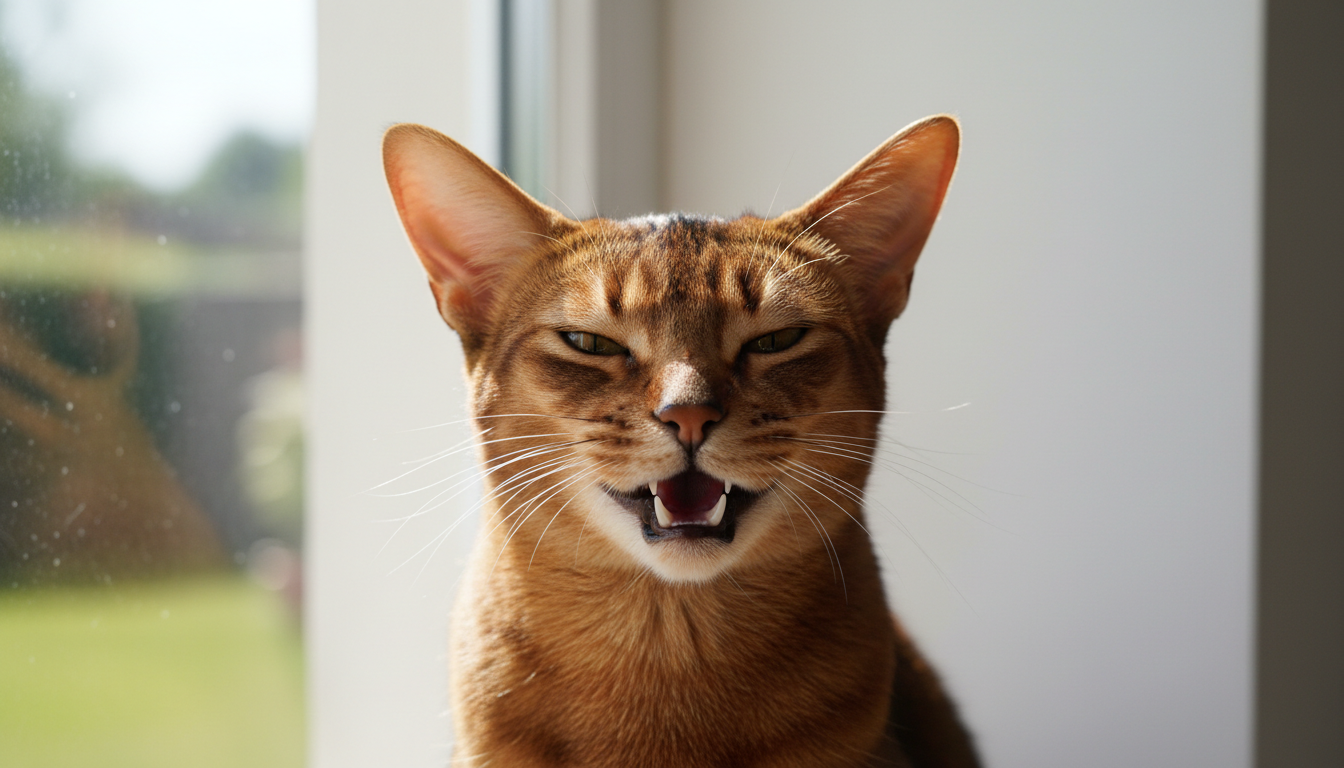
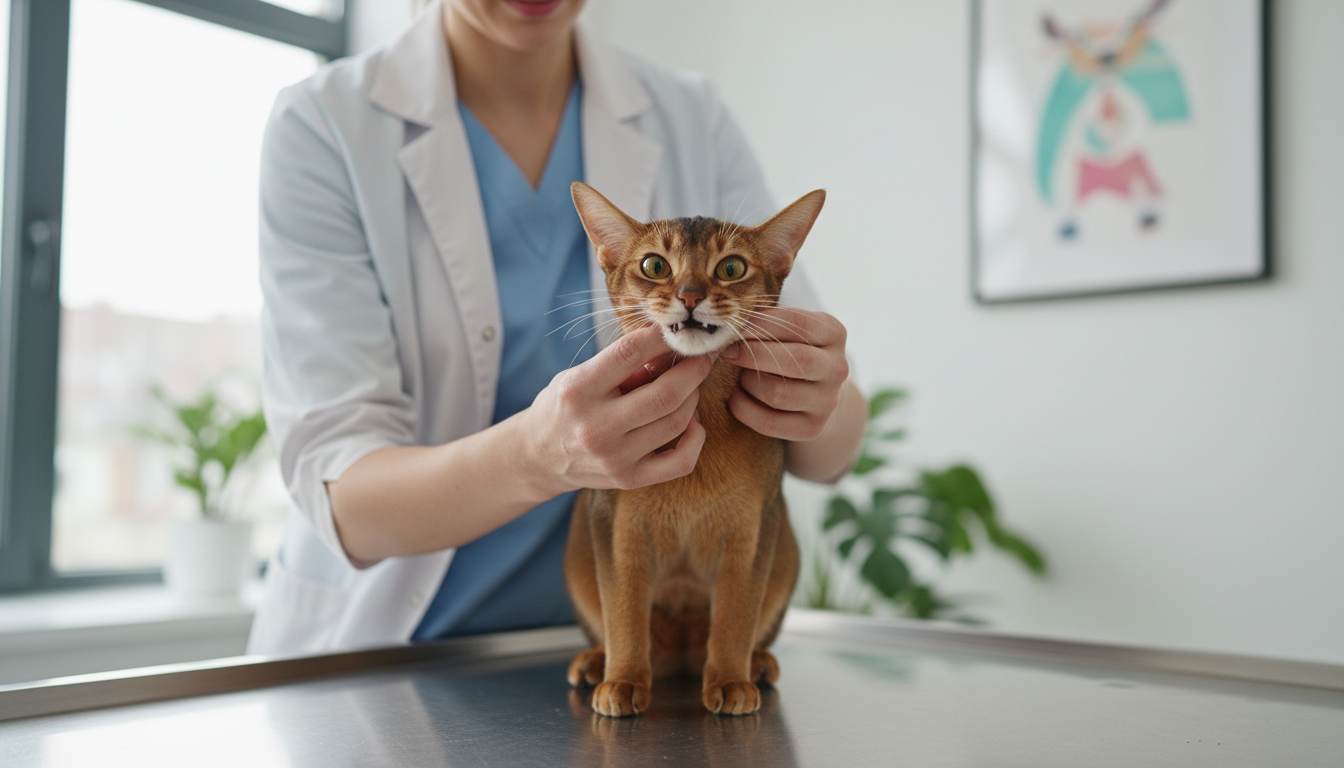
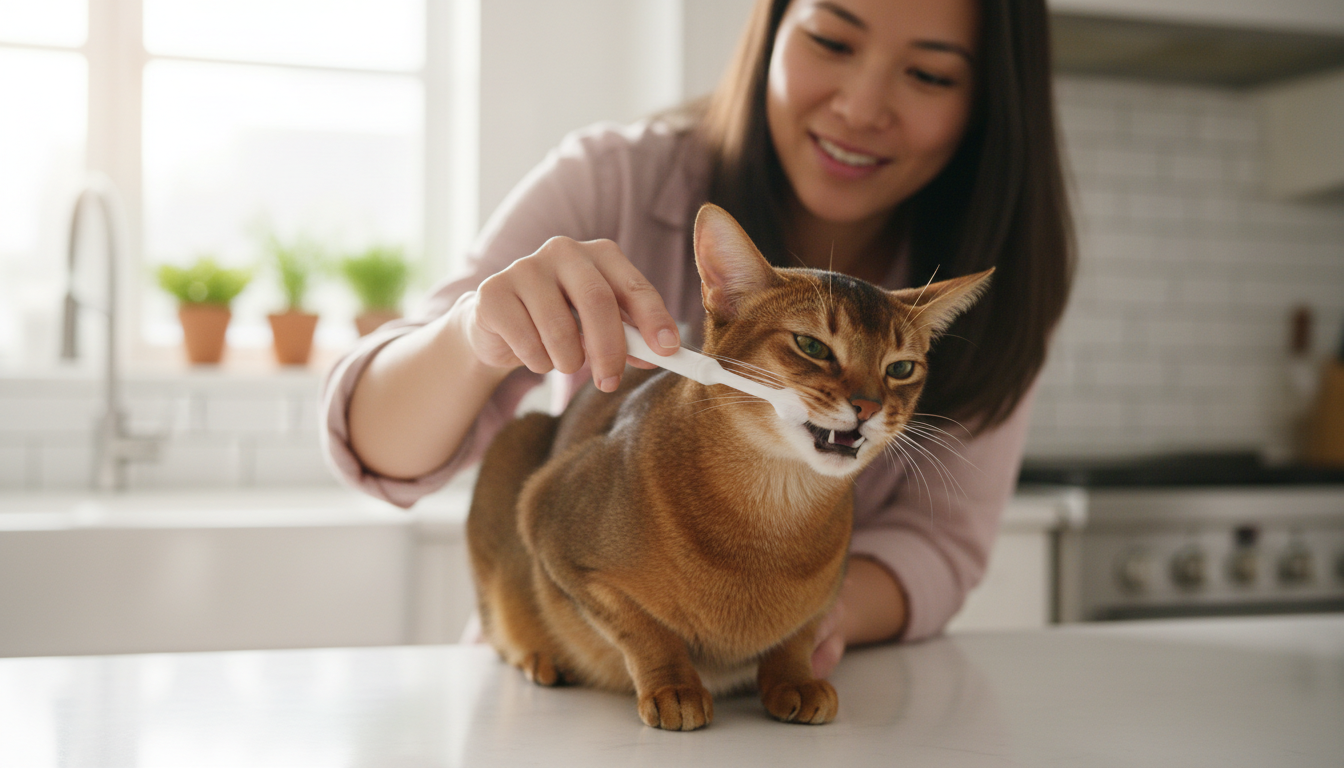
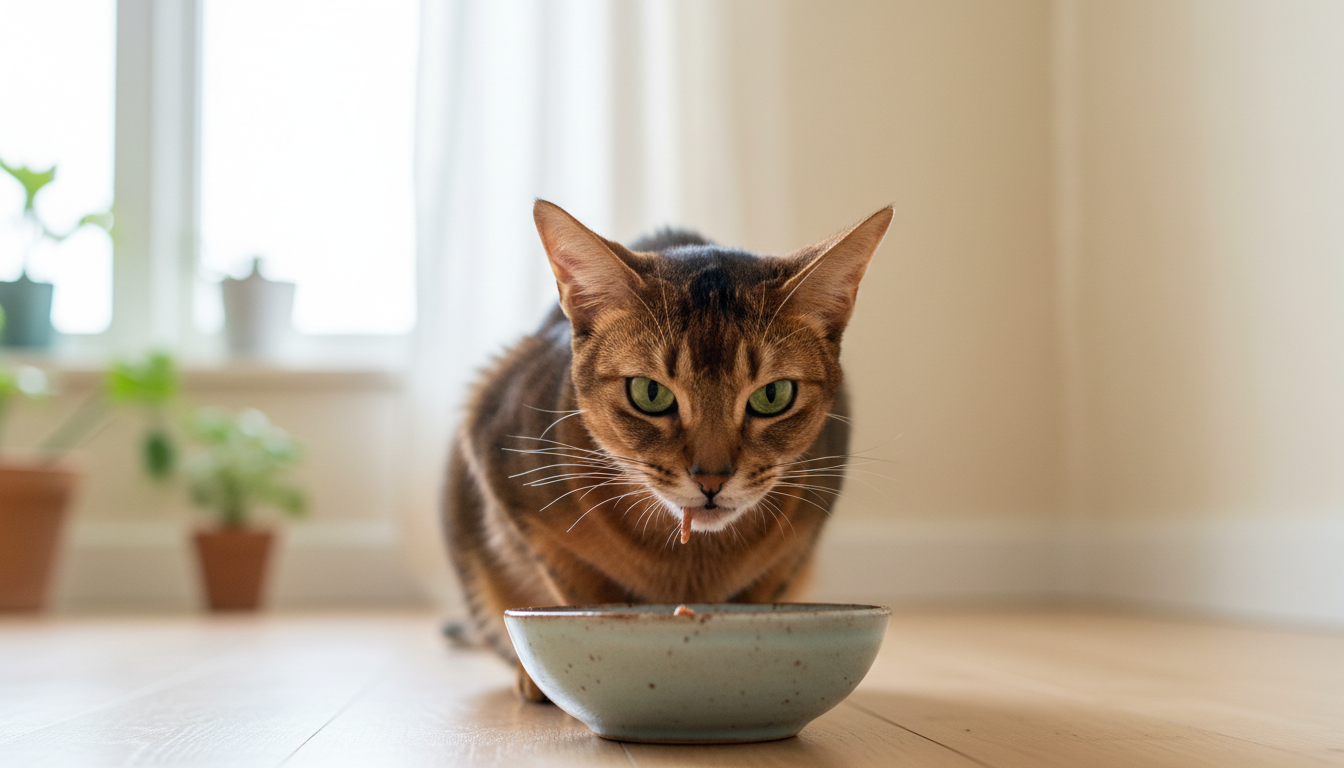

Red gums, a painful mouth or changed eating in an Abyssinian deserves assessment. Breed alone cannot diagnose the problem or predict that ordinary gingivitis will become chronic gingivostomatitis. Describe what changed and arrange a dental examination rather than assuming an inherited immune disorder.
What the symptoms can tell you
Bad breath, drooling, food dropping, chewing on one side and reduced grooming may be useful observations. Some cats still finish meals despite oral pain. Record actual intake and weight change. Do not force the mouth open to obtain photographs, scrape tartar or brush a painful inflamed area.
Gingivitis and stomatitis are different findings
Gingivitis concerns the gums. Gingivostomatitis involves wider oral inflammation and needs its own assessment. One should not be presented as an inevitable progression of the other. The Cornell source below does not establish a strong breed predisposition to gingivostomatitis, so a breed-specific prevalence or referral-rate claim is not justified here.
What to ask at the examination
- Which tissues are affected and what diagnosis is supported?
- Is pain interfering with food intake?
- Is an anesthetized examination and dental imaging indicated?
- Are other tests needed before deciding treatment?
- What should be done before the procedure and at home afterward?
The visible tooth surface does not show every problem beneath the gumline. Treatment depends on findings; antibiotics alone are not a general solution to plaque-associated disease. Any extraction or wider treatment plan should be explained for the individual cat.
Build home care after pain is addressed
Ask for a demonstration of an appropriate brushing method and feline-safe product when the mouth is comfortable enough. Introduce handling gradually and stop if painful. A dental diet, chew or water additive should be evaluated for its particular purpose and evidence, not treated as interchangeable with examination or treatment. A cat that cannot chew a product comfortably should not be encouraged to persist.
When to seek help sooner
Poor intake, worsening pain, bleeding or facial swelling warrants prompt contact. Breathing difficulty, collapse or severe deterioration needs emergency care. Ask for feeding and medicine instructions while arranging assessment; do not give human painkillers or force food into a resisting or weak cat.
At follow-up, report comfort, actual eating and the ability to carry out the prescribed home routine. Prevention and rechecks should reflect the cat’s findings and response rather than an unsupported breed-wide schedule.
Sources
General education; individual diagnosis and care require an appropriate veterinary assessment.
This article is for general education and is not a substitute for care from your own veterinarian. Learn about The Pet Vet and our editorial policy.