
Boxer puppy growth happens fast, and knowing what’s normal can save you a lot of worry. From wobbly-legged newborns to a goofy, muscular adolescent, your Boxer puppy will go through distinct stages in the first year. This guide walks you through what to expect at each stage, the health checks that matter most, and when it’s time to call your vet.
Table of Contents
- The First Few Weeks: A Fragile Start
- Weeks Four Through Eight: Weaning and Socialization Begin
- Two to Four Months: Home, Growth Spurts, and First Vet Visits
- Four to Six Months: The Awkward Adolescent Phase
- Six to Nine Months: Filling Out
- Nine to Twelve Months: Approaching Adulthood
- Tracking Healthy Weight Gain
- Common Growth-Related Concerns in Boxers
- Teething and Dental Development
- Exercise and Activity Levels by Age
- Training and Mental Development
- Nutrition Through the Growth Stages
- When to Call the Vet
- Setting Your Boxer Up for a Healthy Adulthood
The First Few Weeks: A Fragile Start
Boxer puppies are born blind, deaf, and completely dependent on their mother during the first two weeks of life. If you brought your puppy home before eight weeks of age, that’s a red flag worth discussing with your vet, because early separation from the litter can affect both physical development and behavior later on. During this neonatal stage, a healthy Boxer puppy should be gaining weight steadily every day, nursing frequently, and sleeping most of the time.
By around two to three weeks, the eyes and ears open, and you’ll start to see the personality emerge. Puppies begin to stand, take wobbly steps, and interact with littermates. This is also when breeders typically start monitoring for early signs of health concerns, since Boxers can be prone to certain congenital issues that show up early, including heart murmurs. If you’re getting your puppy from a breeder, ask whether the litter has been checked by a veterinarian before going home.
Weeks Four Through Eight: Weaning and Socialization Begin
This is a big stretch of development. Puppies start transitioning from mother’s milk to solid puppy food, usually moistened at first to make it easier to eat. You’ll notice rapid physical changes week to week, including filling out through the chest and a noticeable gain in coordination. Boxers at this age are playful, curious, and starting to test boundaries with their littermates, which is actually an important part of learning bite inhibition and social skills.
Socialization windows are opening during this period, and it matters a lot for a breed like the Boxer, which tends to be highly people-oriented and energetic as an adult. Gentle exposure to new sounds, surfaces, and brief handling by different people can make a real difference in how confident and adaptable your dog becomes. Your vet will likely want to see the puppy around six to eight weeks for the first round of vaccinations and a general health exam.
Two to Four Months: Home, Growth Spurts, and First Vet Visits
Most Boxer puppies go to their new homes around eight weeks old. This is also when growth really takes off. You’ll likely notice your puppy’s paws, ears, and head seem a little too big for the rest of the body. That’s completely normal and part of how Boxers grow into their proportions over time. Expect frequent naps between bursts of intense play, since growing bodies need a lot of rest.
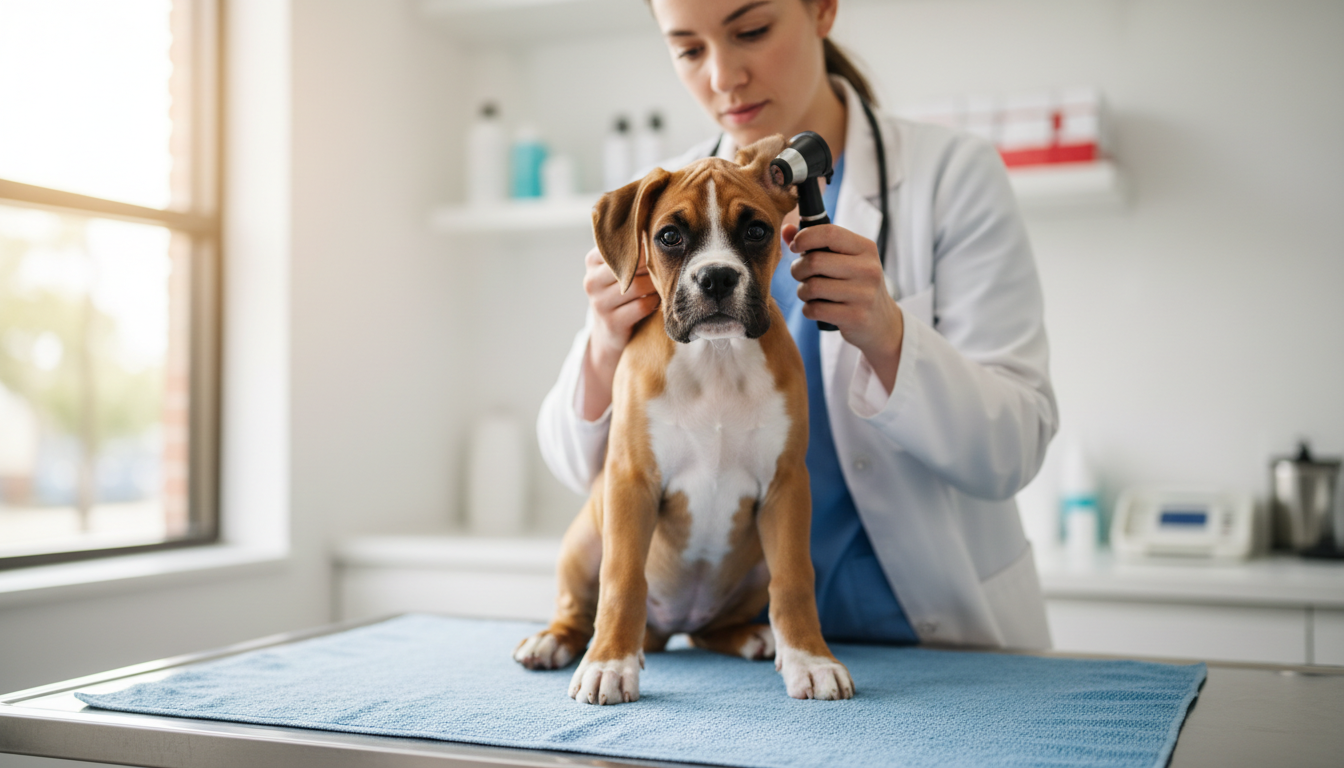
This period is also when the vaccination series continues and your vet will check things like weight gain trends, joint and gait development, and overall body condition. Boxers grow quickly, and overfeeding during this stage can contribute to joint stress later, so following your vet’s feeding guidance rather than guessing at portions is important.
- Schedule vaccination boosters as recommended by your vet
- Introduce a consistent, age-appropriate puppy food
- Begin basic house training and crate routines
- Watch for consistent, steady weight gain rather than sudden spikes

Four to Six Months: The Awkward Adolescent Phase
Somewhere around four months, Boxer puppies start losing their baby teeth, and you may find small teeth around the house or notice a bit of mouth discomfort. This is also when growth plates are still very active, which is why many vets recommend limiting high-impact activities like jumping from heights or long runs on hard surfaces until bones have had more time to develop.
Your puppy’s energy level at this stage can feel like a lot. Boxers are an athletic breed, and adolescence often brings a burst of confidence along with some selective hearing. This is normal, but it’s also a critical window for reinforcing training, since habits formed now tend to stick. If you notice any limping, reluctance to move, or signs of discomfort during this growth phase, it’s worth having your vet take a look rather than assuming it’s just normal clumsiness.
Six to Nine Months: Filling Out
By six months, most of the awkward puppy proportions start evening out, though Boxers continue to build muscle and frame well beyond this point. You’ll notice your puppy’s chest deepening and the overall body becoming more balanced. Many Boxers reach a good portion of their adult height by this age, even though they’ll keep adding muscle and weight for months to come.
This is also a common time for spay or neuter discussions with your vet, if you haven’t already had that conversation. Timing can depend on a few factors specific to your puppy, so it’s worth talking through the options rather than following a one-size-fits-all timeline. Continued training consistency matters here too, since Boxers are smart and food-motivated, which makes this a great window for more advanced obedience work.

Nine to Twelve Months: Approaching Adulthood
Most Boxers are close to their adult height by around nine to twelve months, though it’s not unusual for them to keep filling out with muscle mass until closer to two or even three years old. You may notice your puppy’s energy starting to feel a bit more focused compared to the scattered bursts of early adolescence, though Boxers remain a high-energy breed well into adulthood.
At this stage, your vet visits typically shift from the frequent puppy schedule to a more standard annual wellness rhythm, though your vet will guide you on the right timing based on your individual dog. This is a good point to reassess diet, since nutritional needs change as growth slows and the switch from puppy food to adult food usually happens somewhere in this window, guided by your vet’s recommendation.
Tracking Healthy Weight Gain
Weight gain in Boxer puppies should be fairly steady rather than coming in sudden jumps or stalls. Significant drops in appetite, lethargy that doesn’t match normal puppy tiredness, or a puppy that seems to be falling behind littermates in size are all reasons to check in with your vet. Boxers are a muscular, medium-to-large breed, and genetics play a big role in exactly how big your individual puppy will get, so comparing too closely to other Boxers you’ve seen isn’t always helpful.
- Weigh your puppy regularly and keep a simple log
- Watch body condition rather than fixating on a number on the scale
- Ask your vet to show you how to feel for ribs and waist definition
- Report any sudden weight loss or lack of appetite promptly

Common Growth-Related Concerns in Boxers
Like many breeds, Boxers have a few growth-related issues that vets watch for during the puppy stages. Hip and elbow joint development is one area of focus, since structural problems can sometimes become apparent as puppies grow. Heart health is another area that deserves attention in this breed specifically, since Boxers as a breed have a known predisposition to certain cardiac conditions that can sometimes be picked up through routine exams even in young puppies.
Skin issues can also show up early in some Boxers, given their short coat and sensitive skin. None of this means your puppy will necessarily develop any of these conditions, but it does mean regular veterinary checkups throughout the first year are especially valuable for this breed. Your vet can monitor subtle changes over time that might be hard to notice day to day as the owner.
Teething and Dental Development
Teething is a major part of the first several months of a Boxer puppy’s life. Baby teeth start coming in around three to four weeks and are typically fully replaced by adult teeth somewhere between four and seven months. During this window, increased chewing behavior is completely normal and is your puppy’s way of relieving gum discomfort.
Providing safe, appropriate chew options can help protect your furniture and shoes while also supporting healthy jaw and teeth development. If you notice retained baby teeth once the adult teeth have come in, meaning a baby tooth hasn’t fallen out on its own, mention it to your vet, since retained teeth sometimes need to be addressed to prevent crowding or alignment issues.
Exercise and Activity Levels by Age
Boxer puppies have a lot of energy, but their joints and growth plates are still developing, which means exercise needs to be age-appropriate rather than matched to an adult dog’s activity level. Short, frequent play sessions tend to work better than long, intense ones in the early months. As your puppy grows, you can gradually increase duration and intensity, always paying attention to how your dog recovers afterward.
Jumping, especially from furniture or down stairs, is something many vets recommend limiting until a puppy’s growth plates have closed, which varies somewhat by individual dog. If you’re unsure what’s appropriate for your puppy’s current age and size, your vet can give you specific guidance based on your dog’s development.
- Favor short play sessions over long, high-impact exercise in early months
- Avoid repetitive jumping on hard surfaces during the growth period
- Let your puppy set the pace and watch for signs of fatigue
- Gradually increase activity as your vet confirms it’s appropriate
Training and Mental Development
Boxers are intelligent, people-focused dogs, and mental stimulation matters just as much as physical exercise during puppyhood. Basic obedience training can start early, and short, positive training sessions tend to work better than long drawn-out ones for a young puppy’s attention span. Consistency across the household helps puppies understand expectations faster, so it’s worth getting everyone in the family on the same page about rules and cues.
Socialization should continue well beyond the early puppy weeks. Continued exposure to new people, environments, and other dogs throughout the first year helps support the confident, friendly temperament Boxers are known for. If you notice signs of fearfulness or unusual aggression during this developmental period, it’s worth discussing with your vet or a qualified trainer sooner rather than later.

Nutrition Through the Growth Stages
Feeding a growing Boxer puppy appropriately matters a great deal, since both underfeeding and overfeeding can affect development. Puppy-specific food formulated for medium-to-large breeds is generally recommended during the growth phase, since these formulas are designed with growth rate and joint development in mind. Portion sizes should be guided by your vet rather than estimated, since individual puppies can have different needs based on activity level and metabolism.
As your Boxer approaches adulthood, your vet will help you determine the right time to transition to adult food. Changes in diet should generally happen gradually, mixing the new food with the old over several days, to avoid digestive upset. If you notice ongoing diarrhea, vomiting, or a sudden refusal to eat at any point during the growth period, that’s worth a call to your vet rather than waiting it out.
When to Call the Vet
While a lot of puppy clumsiness and quirky behavior is completely normal, certain signs during the growth period warrant a prompt call to your veterinarian. Persistent limping, noticeable asymmetry in how your puppy stands or moves, sudden lethargy, or a loss of appetite that lasts more than a day or so are all worth checking out. Boxers can also be prone to certain heart conditions, so any signs of unusual tiring during play, coughing, or fainting episodes should be evaluated right away.
- Limping or reluctance to put weight on a leg
- Sudden lethargy or significant drop in energy
- Loss of appetite lasting more than a day
- Fainting, excessive coughing, or unusual tiring during play
- Visible asymmetry in posture or gait
Setting Your Boxer Up for a Healthy Adulthood
The first year sets the foundation for your Boxer’s long-term health, but it’s really just the beginning of an ongoing partnership with your veterinarian. Regular wellness visits, appropriate nutrition, age-appropriate exercise, and attentive observation of your dog’s development all play a role in helping your Boxer grow into a healthy, happy adult. Every puppy develops at a slightly different pace, so try not to compare too closely to other dogs you’ve seen or read about online.
Trust your vet’s guidance throughout this process, since they’re able to track your individual puppy’s growth curve, body condition, and any breed-specific concerns over time. If something feels off, even if you can’t quite put your finger on why, it’s always worth mentioning at your next appointment or giving the clinic a call. Raising a Boxer puppy through that first year of rapid change is a lot of work, but it’s also one of the most rewarding stretches of having a dog.
This article is for general education and is not a substitute for care from your own veterinarian. Learn about The Pet Vet and our editorial policy.