
Reverse sneezing in Cavalier King Charles Spaniels can send any owner into a panic the first time it happens. Your dog suddenly snorts, gags, and gasps for air, standing stiff with its neck stretched out, and it can look like a seizure or a choking emergency. The good news is that reverse sneezing is usually a harmless, self-limiting event in this breed. This guide walks you through why Cavaliers are prone to it, how to tell it apart from something more serious, and when you should actually call your vet.
Table of Contents
- What Reverse Sneezing Actually Is
- Why Cavalier King Charles Spaniels Are Prone to It
- Common Triggers You Might Notice
- What a Typical Episode Looks and Sounds Like
- How to Tell It Apart From a Medical Emergency
- What You Can Do During an Episode
- How Often Is Too Often
- Other Conditions That Can Mimic Reverse Sneezing
- When to Actually Call Your Vet
- Can Reverse Sneezing Be Prevented
- Living With a Dog Who Reverse Sneezes
- The Bottom Line
What Reverse Sneezing Actually Is
Reverse sneezing is a sudden, repeated series of forceful inhalations through the nose, rather than the typical outward burst of a regular sneeze. Your Cavalier will often stand with its elbows spread, neck extended, and eyes a little wide, making loud snorting or honking noises that can sound like the dog is choking or struggling to breathe. Each episode usually lasts anywhere from a few seconds to about a minute, though it can feel much longer when you’re watching it happen.
The medical term for this is paroxysmal respiratory reflex, and it happens when the soft palate and throat go into a brief spasm. This causes air to be pulled in rapidly through the nose instead of being pushed out, which is the opposite of what happens during a normal sneeze. It is not a disease in itself, but a reflex response, similar in some ways to hiccups, and most dogs recover completely on their own within a minute or two.
Despite how dramatic it looks, reverse sneezing does not usually involve any pain, and most dogs act completely normal immediately afterward. They may shake their head, swallow a few times, or just go right back to what they were doing before the episode started. If you have never seen it before, it can be genuinely frightening to witness, which is exactly why owners search for answers right after their dog’s first episode.
Why Cavalier King Charles Spaniels Are Prone to It
Cavalier King Charles Spaniels have a slightly shortened muzzle and a relatively small nasal cavity compared to longer-nosed breeds, which puts them in a category of dogs more likely to experience reverse sneezing. Their soft palate and throat structure can be more sensitive to irritation, and the airway anatomy that gives them their sweet, flat-ish facial expression also makes the tissue around the throat prone to brief spasms.
Breeds with this kind of head shape are not considered true brachycephalic breeds in the same way Bulldogs or Pugs are, but Cavaliers still sit closer to that end of the spectrum than, say, a Collie or a Greyhound. This anatomical tendency means the soft palate can flutter or momentarily block part of the airway when it becomes irritated, triggering the reflex that causes reverse sneezing.
Many Cavalier owners notice that episodes seem to cluster around specific triggers, which lines up with how sensitive this breed’s airway tends to be. Excitement, pulling on a leash and collar, sudden temperature changes, and nasal irritation from dust or scented products are all common culprits.
Common Triggers You Might Notice
Most episodes of reverse sneezing in Cavaliers are set off by something fairly ordinary in the dog’s environment or routine. Identifying these triggers will not make the reflex disappear entirely, since this breed has an underlying anatomical tendency toward it, but it can help you reduce how often episodes happen.
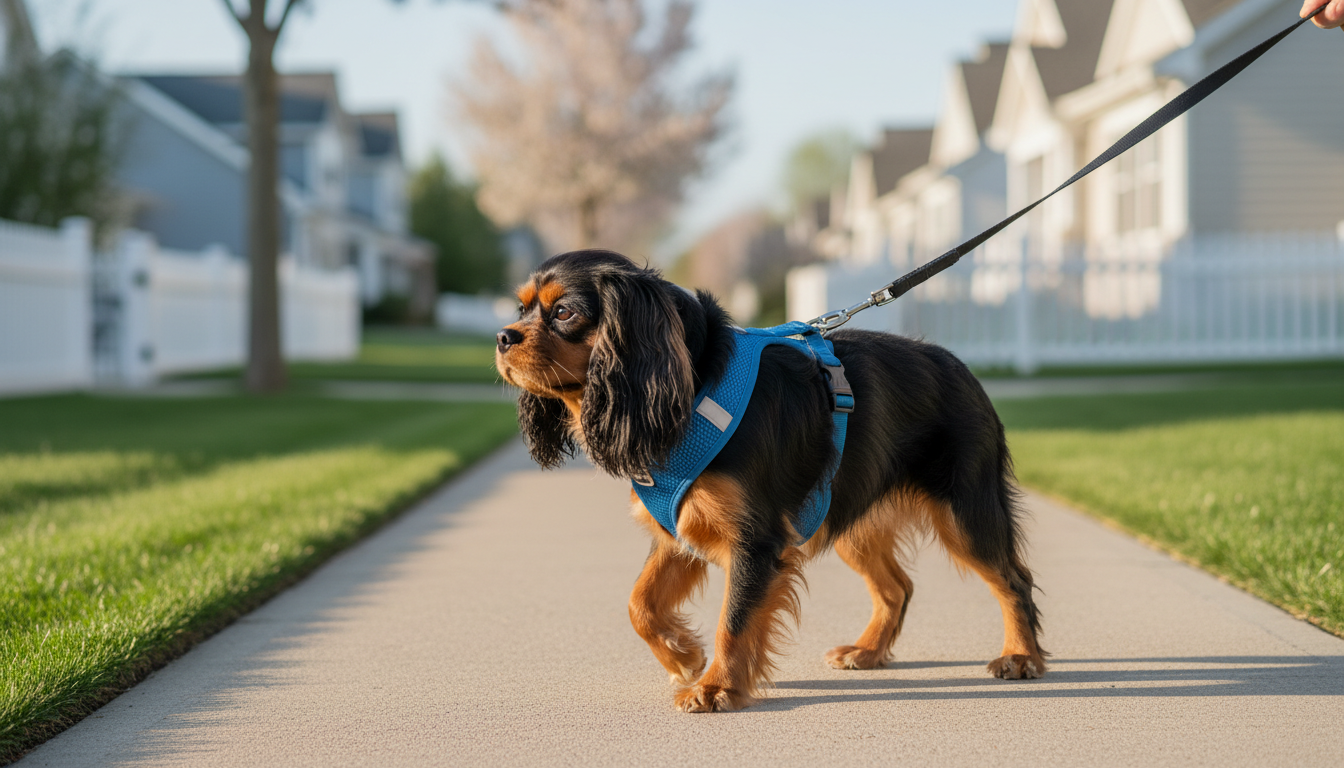
If you notice a pattern, switching from a collar to a harness for walks is one of the simplest changes that tends to help, since it takes pressure off the throat entirely. Keeping your home reasonably free of strong fragrances and dust can also reduce how often your Cavalier’s nasal passages get irritated enough to trigger an episode.
- Excitement or overstimulation, such as greeting you at the door or playing fetch
- Pulling against a collar, which puts pressure on the throat and trachea
- Sudden exposure to cold air, especially right after coming inside from a walk
- Strong smells like perfume, cleaning products, or scented candles
- Dust, pollen, or other airborne irritants stirred up during walks or at home
- Drinking water too quickly or eating in a hurry
What a Typical Episode Looks and Sounds Like
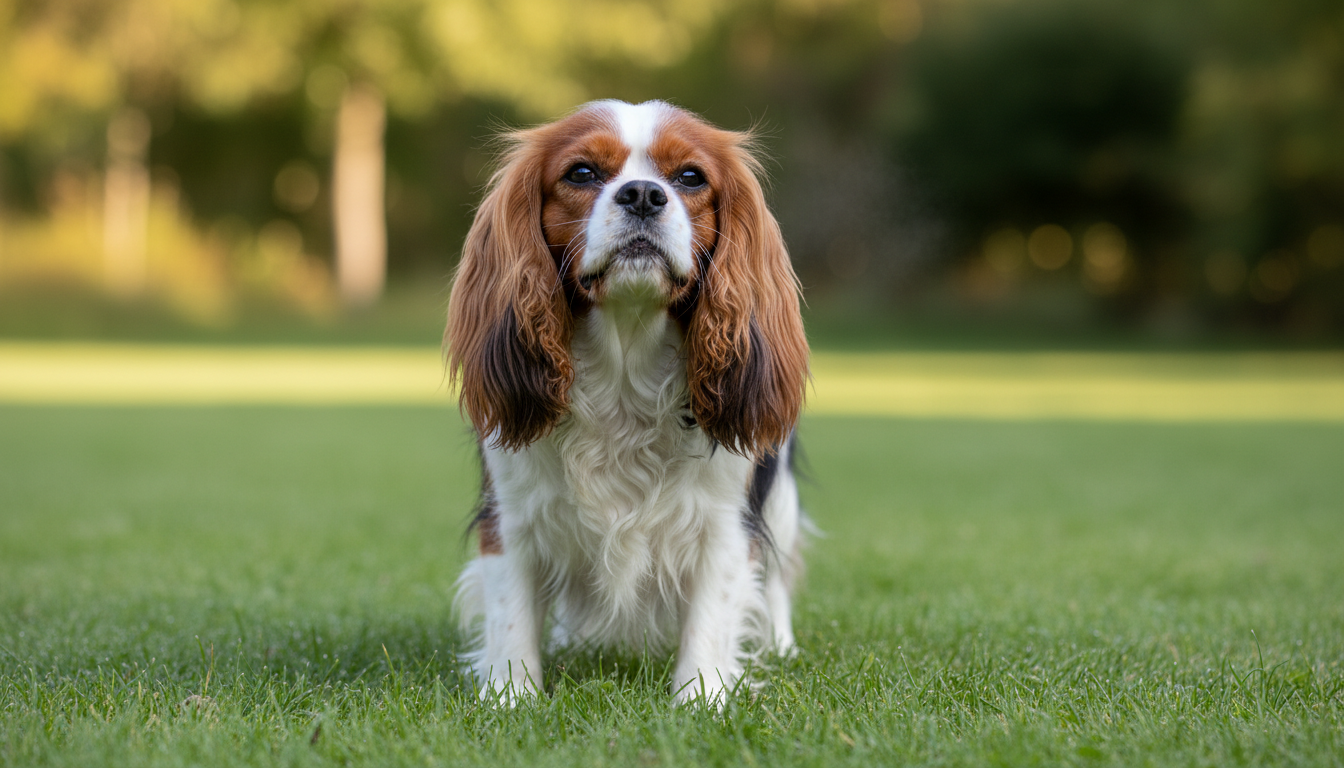
Understanding what a classic reverse sneezing episode looks like can help you stay calm the next time it happens, rather than rushing to the emergency vet in a panic. Your dog will typically stop whatever it is doing, stand still, and extend its neck while making repeated snorting, honking, or gasping sounds through the nose. The chest and abdomen may pump noticeably with each inhale, and some dogs will paw at their face or rub their nose on the ground during the episode.
Owners often describe the sound as similar to a goose honking or a pig snorting, and it is genuinely unsettling the first few times you hear it. The episode usually resolves on its own within thirty seconds to two minutes, and your dog will typically act completely normal right afterward, often wanting to continue playing or eating as if nothing happened.
- The dog stands still with elbows out and neck stretched forward
- Repeated snorting or honking sounds happen in quick succession
- Breathing looks labored but the dog remains alert and responsive
- The episode ends on its own, often followed by swallowing or head shaking
- Normal behavior resumes within minutes with no lingering distress
How to Tell It Apart From a Medical Emergency
This is the part that matters most, because several more serious conditions can look similar to reverse sneezing at first glance, and telling them apart quickly makes a real difference. A dog in true respiratory distress will usually show blue or pale gums, will not stop struggling to breathe after a minute or two, and often seems genuinely distressed, disoriented, or weak rather than just briefly startled.
Collapse, seizures, and choking on a foreign object can all be mistaken for reverse sneezing by a worried owner, but each of these has distinguishing features. A seizure typically involves a loss of consciousness or control over the limbs, while reverse sneezing does not affect your dog’s awareness at all. Choking tends to involve pawing frantically at the mouth, drooling heavily, and visible panic, and it does not resolve on its own the way reverse sneezing does.
If you ever see any of these signs, treat it as an emergency and get your dog to a veterinarian immediately rather than waiting to see if it resolves.
- Gum color turns blue, gray, or very pale instead of staying pink
- The episode lasts well beyond two or three minutes without easing up
- Your dog loses consciousness, collapses, or seems disoriented afterward
- There is visible blood, discharge, or an object you can see in the mouth or nose
- Your dog seems distressed, weak, or unwell even after the episode ends
What You Can Do During an Episode
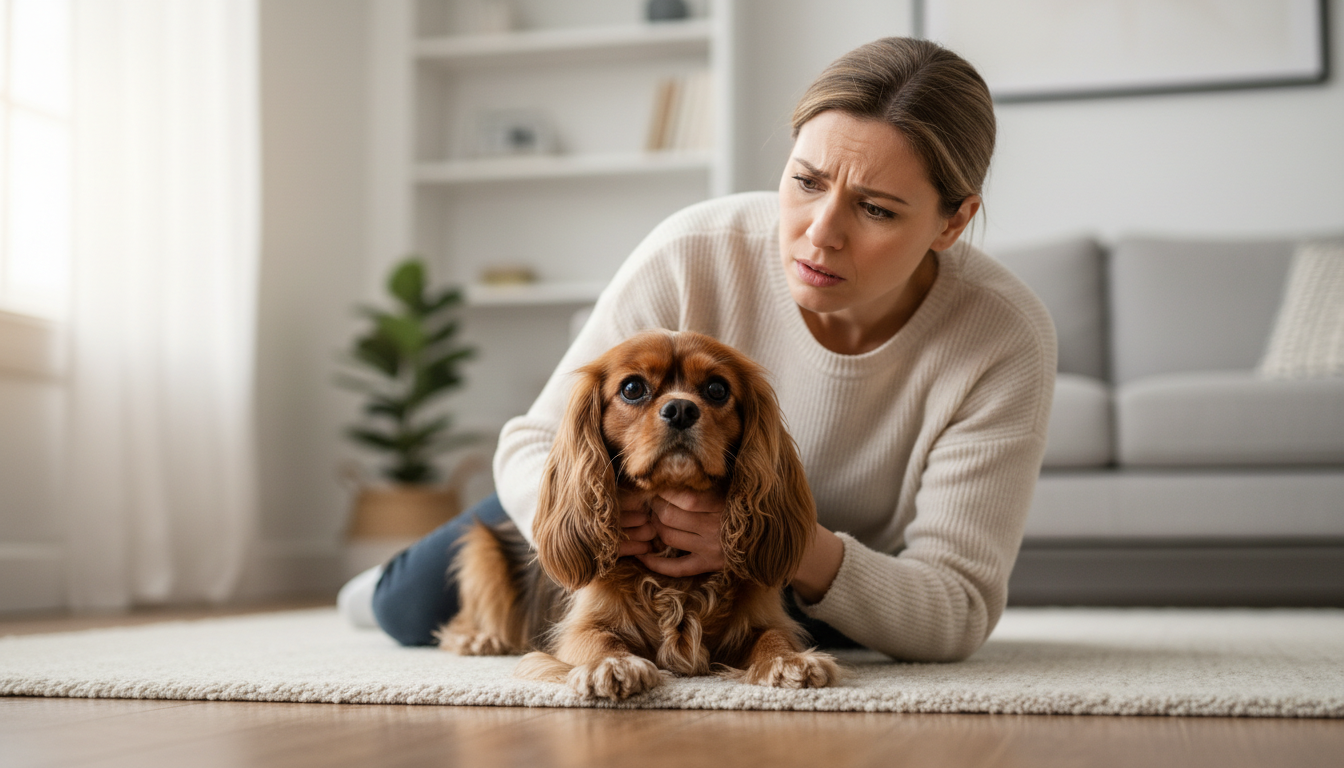
While most episodes of reverse sneezing in Cavalier King Charles Spaniels resolve on their own, there are a few gentle things you can do to help your dog through it and possibly shorten the episode. Staying calm yourself is actually one of the most helpful things you can do, since your dog can pick up on your stress and it may prolong the reflex if your dog becomes more anxious.
Lightly stroking your dog’s throat in a downward motion can sometimes help interrupt the spasm, as can gently covering the nostrils for a second or two to encourage a swallow, which often breaks the cycle. Offering a small distraction, like softly calling your dog’s name or offering a lick of something tasty, can also help shift the nervous system out of the reflex pattern.
Most of the time, your dog will not need any intervention at all and will recover within a minute regardless of what you do, but these techniques can offer some reassurance while you wait it out.
- Stay calm and speak to your dog in a soothing, quiet voice
- Gently stroke the throat in a downward motion toward the chest
- Briefly and gently cover the nostrils to encourage a swallow
- Offer a small distraction such as a favorite treat or a gentle pat
- Avoid restraining your dog tightly, which can increase anxiety
How Often Is Too Often
An occasional episode of reverse sneezing, especially one tied to an obvious trigger like excitement or a cold morning walk, is not usually something to worry about in a Cavalier. However, if you notice episodes becoming more frequent, lasting longer than they used to, or happening multiple times in a single day without an obvious cause, it is worth mentioning to your vet.
A pattern of escalating episodes can sometimes point to an underlying issue in the nasal passages or throat that is making the tissue more reactive than usual, rather than being purely the breed’s normal anatomical quirk. Tracking how often episodes happen, what seems to trigger them, and how long they last can give your vet useful information if you do decide a check-up is warranted.
Other Conditions That Can Mimic Reverse Sneezing
Because Cavalier King Charles Spaniels can be prone to a number of respiratory and airway sensitivities, it helps to know what else might be going on if episodes seem different from the classic pattern. Nasal mites, foreign bodies lodged in the nasal passage, allergies, and infections of the upper respiratory tract can all cause snorting or sneezing-like sounds that might be confused with a straightforward reverse sneeze.
Soft palate elongation, while more commonly discussed in flatter-faced breeds, can also contribute to airway noise in some Cavaliers and may cause symptoms that overlap with reverse sneezing but persist longer or occur alongside snoring and noisy breathing at rest. If your dog’s symptoms seem to be evolving over time, rather than staying consistent with the pattern you are used to, that shift is worth bringing up with your veterinarian rather than assuming it is still just reverse sneezing.
When to Actually Call Your Vet
Most Cavalier owners will see reverse sneezing many times over their dog’s life without it ever being a cause for concern, but there are specific situations where a vet visit is the right call rather than just waiting it out at home. Trust your instincts here, since you know your dog’s normal behavior better than anyone else.
A veterinary exam can rule out nasal foreign bodies, infections, allergies, or structural issues, and give you real peace of mind rather than just guessing at home.
- Episodes are becoming noticeably more frequent or severe over time
- Your dog shows nasal discharge, especially if it’s thick, colored, or bloody
- There is noisy breathing, snoring, or labored breathing even when not having an episode
- Your dog seems less interested in food, play, or normal activity
- You notice weight loss or a general decline in energy alongside the episodes
- An episode lasts far longer than usual or does not resolve the way it normally does
Can Reverse Sneezing Be Prevented
While you cannot change your Cavalier’s underlying airway anatomy, there are steps that can meaningfully reduce how often episodes occur. Reducing exposure to known triggers is the most practical approach, since this breed’s throat tissue tends to react to irritation and excitement more than most.
None of these steps will eliminate reverse sneezing completely in a breed that is anatomically prone to it, but they can make episodes less frequent and less intense over time.
- Switch from a collar to a harness for walks and everyday wear
- Keep your home free of heavy fragrances, smoke, and aerosol sprays
- Use a humidifier during dry winter months when indoor air gets dry
- Manage excitement around greetings and play to avoid overstimulation
- Keep your dog away from dusty or heavily pollinated areas when possible
- Schedule regular vet check-ups to catch any underlying nasal or throat issues early
Living With a Dog Who Reverse Sneezes
Once you have seen a few episodes and confirmed with your vet that nothing more serious is going on, reverse sneezing tends to become far less alarming over time. Many Cavalier owners describe it as just another quirky part of life with the breed, similar to the snoring and occasional snorting sounds that many of these dogs make throughout the day.
Keeping a mental note of your dog’s normal pattern, how episodes typically look, and what tends to set them off will help you stay calm and recognize quickly if something ever seems different or more serious. Sharing this information with pet sitters, dog walkers, or family members who spend time with your dog can also prevent unnecessary panic if an episode happens while you’re not around.
The Bottom Line
Reverse sneezing in Cavalier King Charles Spaniels is a common, usually harmless reflex tied to this breed’s airway anatomy, and most episodes resolve within a minute or two without any treatment at all. Knowing the difference between a typical episode and a true respiratory emergency is the most important thing you can take away here, since the two can look alike to an untrained eye in the first few seconds.
If you are ever unsure whether what you are seeing is reverse sneezing or something more serious, it is always better to have your vet take a look rather than guessing. Your veterinarian can examine your dog’s airway, rule out underlying issues, and give you tailored guidance based on your individual dog’s history and health.
This article is for general education and is not a substitute for care from your own veterinarian. Learn about The Pet Vet and our editorial policy.